उत्पाद वर्णन
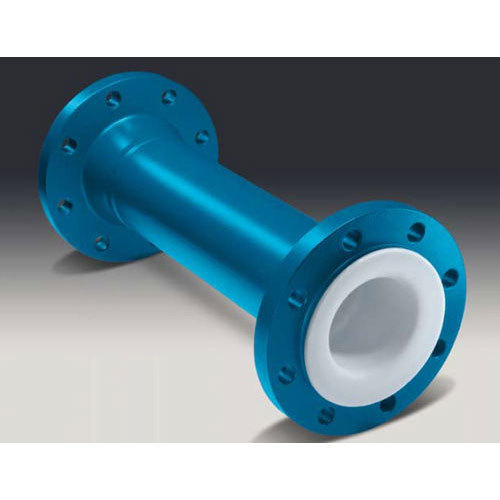
Our company deals in the manufacturing and supplying of medium to high density PTFE Lining that belongs to the class of thermoplastic material that acts as a protective lining that helps in the prevention of surface damages due to corrosive chemicals. It is available in various shapes and thicknesses that can be customized according to customer demands and application areas. The offered product can be delivered to our customers in bulk with a supply ability of 100 pieces per week.
Exceptional Chemical and Temperature ResistancePTFE lining provides robust protection against aggressive chemicals and solvents, making it ideal for environments that demand resistance to corrosive substances. Its reliable performance at temperatures up to 260C (500F) ensures consistent operation in high-temperature applications such as chemical reactors, process equipment, and storage tanks.
Versatile Installation ModesInstallation of PTFE lining is possible either through bonding or mechanical fastening, offering flexibility depending on substrate material and design. This adaptability allows PTFE lining to be securely applied to various surfaces, increasing the longevity of equipment in industrial settings while facilitating maintenance and inspection procedures.
Non-Stick Smooth Surface BenefitsThe smooth and non-stick surface of PTFE lining minimizes residue buildup, contributing to improved cleanliness and easy maintenance. Its non-flammable nature further enhances safety in demanding environments, while the high dielectric and UV resistance make it suitable for both indoor and outdoor installations.
FAQs of PTFE Lining:
Q: How is PTFE lining installed onto pipes and tanks?
A: PTFE lining can be installed using bonding agents or mechanical fastening methods, depending on the substrates material and design. Professional installation ensures a secure fit, maximizing chemical resistance and durability.
Q: What are the benefits of using PTFE lining in chemical processing industries?
A: PTFE lining offers exceptional resistance to most chemicals and solvents, high flexibility, and a smooth, non-stick surface that reduces residue buildup. These attributes help prolong equipment life, improve safety, and lower maintenance requirements.
Q: When should PTFE lining be considered for corrosion protection?
A: PTFE lining is recommended whenever equipment is exposed to harsh chemicals, high temperatures (up to 260C/500F), or when corrosion poses a risk to process integrity. It is especially essential for pipes, tanks, and valves in chemical processing plants.
Q: Where can PTFE lining be applied within industrial facilities?
A: PTFE lining is suitable for application on substrates such as steel or concrete within pipes, tanks, reactors, and other process vessels subjected to corrosive or high-temperature conditions, enhancing their operational lifespan.
Q: What is the process for installing PTFE lining on substrates?
A: The installation process involves preparing the substrate surface, choosing the appropriate bonding or fastening method, and applying the PTFE lining to achieve a secure and durable protective layer suitable for the specific industrial environment.
Q: How does the non-stick, smooth surface of PTFE lining affect maintenance?
A: The smooth, non-stick surface prevents accumulation of residues, making cleaning and maintenance more efficient, reducing downtime and enhancing overall productivity in processing environments.
Q: What makes PTFE lining advantageous in terms of safety and reliability?
A: With its non-flammable nature, excellent UV and dielectric resistance, and extremely low water absorption, PTFE lining ensures safe operation and reliable performance even in challenging industrial settings.