Product Description
Since inception, we have been catering to the diversified requirements of industries by offering Spiral Gasket. These gaskets are manufactured by spirally winding pre-formed metal strip as well as filler on outer periphery of particular metal winding mandrels. These gaskets are offered in a variety of sizes, shapes and dimensions so demands of our esteemed clients can be fulfilled. Their winding and filler materials can be changed in order to accommodate various chemical compatibility requirements. Offered Spiral Gasket is highly acclaimed by customers for its high wearing strength, durability and perfect fitting.
Premium Sealing Technology for Every NeedSpiral Wound Gaskets combine the resilience of winding metal strips with fillers like graphite or PTFE, providing excellent adaptability and sealing capability. Their spiral wound construction assures secure flange sealing even under extreme temperatures, pressures, and aggressive media. Ideal for demanding environments in petrochemical, oil and gas, power generation, and more.
Versatile Material and Design OptionsChoose from stainless steel, graphite, PTFE, or carbon steel to match your applications specific requirements. Available in spiral and round shapes and various thicknessesincluding 3.2 mm, 4.5 mm, and 6.4 mmthese gaskets are further customizable to accommodate unique operational needs and standards, like ASME, DIN, and JIS.
FAQs of Spiral Gasket:
Q: How is a spiral wound gasket typically used in industrial applications?
A: Spiral wound gaskets are primarily used to provide reliable flange sealing in pipelines, valves, and pumps, especially in petrochemical, oil and gas, and power plants. They seal efficiently against steam, gas, oil, solvents, or chemicals, even under high temperature and pressure conditions.
Q: What are the advantages of spiral wound construction in gaskets?
A: The spiral wound construction combines alternating layers of metal and a soft filler, enabling superior flexibility, high resilience, and sealing effectiveness. This design withstands thermal cycling, pressure fluctuations, and harsh chemicals, enhancing safety and operational reliability.
Q: When should I choose an inner or outer ring for my spiral wound gasket?
A: Inner rings provide structural reinforcement and protect the gasket from inward buckling or media intrusion, while outer rings act as compression limiters, ensuring precise bolt load transfer. Select rings in carbon steel or stainless steel based on your applications temperature, pressure, and chemical compatibility requirements.
Q: Where can these spiral wound gaskets be applied?
A: These gaskets are suitable for a variety of settings, including petrochemical plants, refineries, oil & gas pipelines, power plants, and water treatment facilities, as well as valves, flanges, and pumps requiring high-integrity sealing.
Q: What is the process for customizing spiral wound gaskets for specific needs?
A: To customize a gasket, specify your required material, shape, thickness, rings, operational standards, and media compatibility. Manufacturers can then tailor the gasket to match application parameters and applicable standards such as ASME B16.20, DIN, or JIS.
Q: How does material selection impact gasket performance?
A: Choosing the right materialsuch as stainless steel for corrosion resistance or graphite for higher temperature toleranceensures optimal chemical compatibility, mechanical strength, and temperature or pressure endurance, thereby extending service life.
Q: What benefits do spiral wound gaskets offer over conventional sealing methods?
A: Spiral wound gaskets deliver exceptional adaptability to flange surface irregularities, resistance to blowout, compatibility with a wide temperature and pressure range, and the ability to function in high vacuum scenarios, making them superior in demanding industrial environments.

 Send Inquiry
 Send SMS
 Call Me Free


 English
 Spanish
 French
 German
 Italian
 Chinese (Simplified)
 Japanese
 Korean
 Arabic
 Portuguese
 08045477044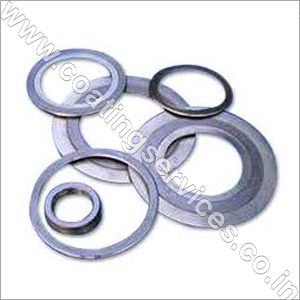


 Send Inquiry





 Send Inquiry
 Send Inquiry
 Send SMS
